TEDxSantaBarbara Salon
Salon Recap · May 27, 2026

Climate Action: Energized by Hope

Eighty people, one room, and the question we don't ask each other often enough. What's actually going right?

Hosted by Mark Sylvester · Curated with Sigrid Wright + Victoria Riskin
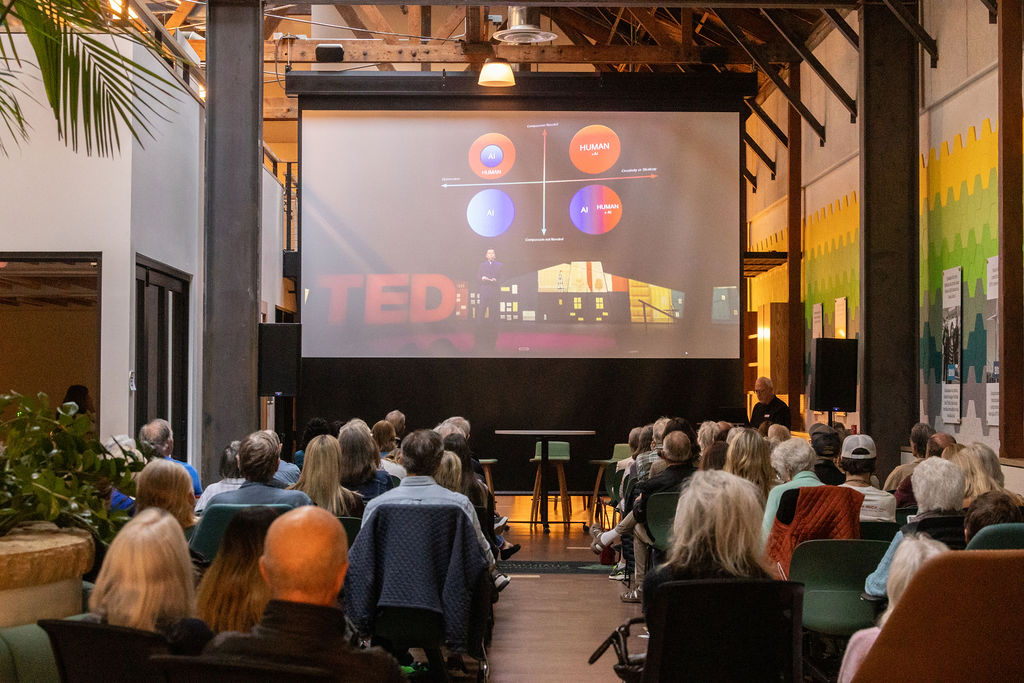
The audience watching a TED talk on the big screen at CEC's Environmental Hub.
The Room · 80 people

Lights down. One screen. One topic, held long enough to actually look at it.

A different kind of TED night

A Salon is TED's way of gathering a community around a single idea more than once a year. One topic. Talks chosen to build an argument, not just sampled. And time to talk back, which you never get at a big TED event.

For this one we picked hope. Not the soft kind — the kind grounded in data.

Here's how it worked. I find the venue and the topic. Then the curators went and watched a stack of talks and brought back the three that made the case together. Sigrid Wright and Victoria Riskin did that work for this one.

01

One topic, held long enough to actually look at it.

02

Three talks, sequenced to build toward action.

03

A real conversation, after, with the room, not at it.

Setting the table

Sigrid had spent the year listening. Three hundred cups of tea. Wisdom walks. Hands held. By December the note was the same one almost everywhere. Despair.

Her response was to spend a night on what's going right. Not to shellac over what isn't, just to make space for the other half of the story.

Vicki followed with the publisher's view. Her work at Bluedot Living is to move readers out of doom and into what they can actually do. The point landed hard. People care, they just need to know what to do, and it can't be a burden.

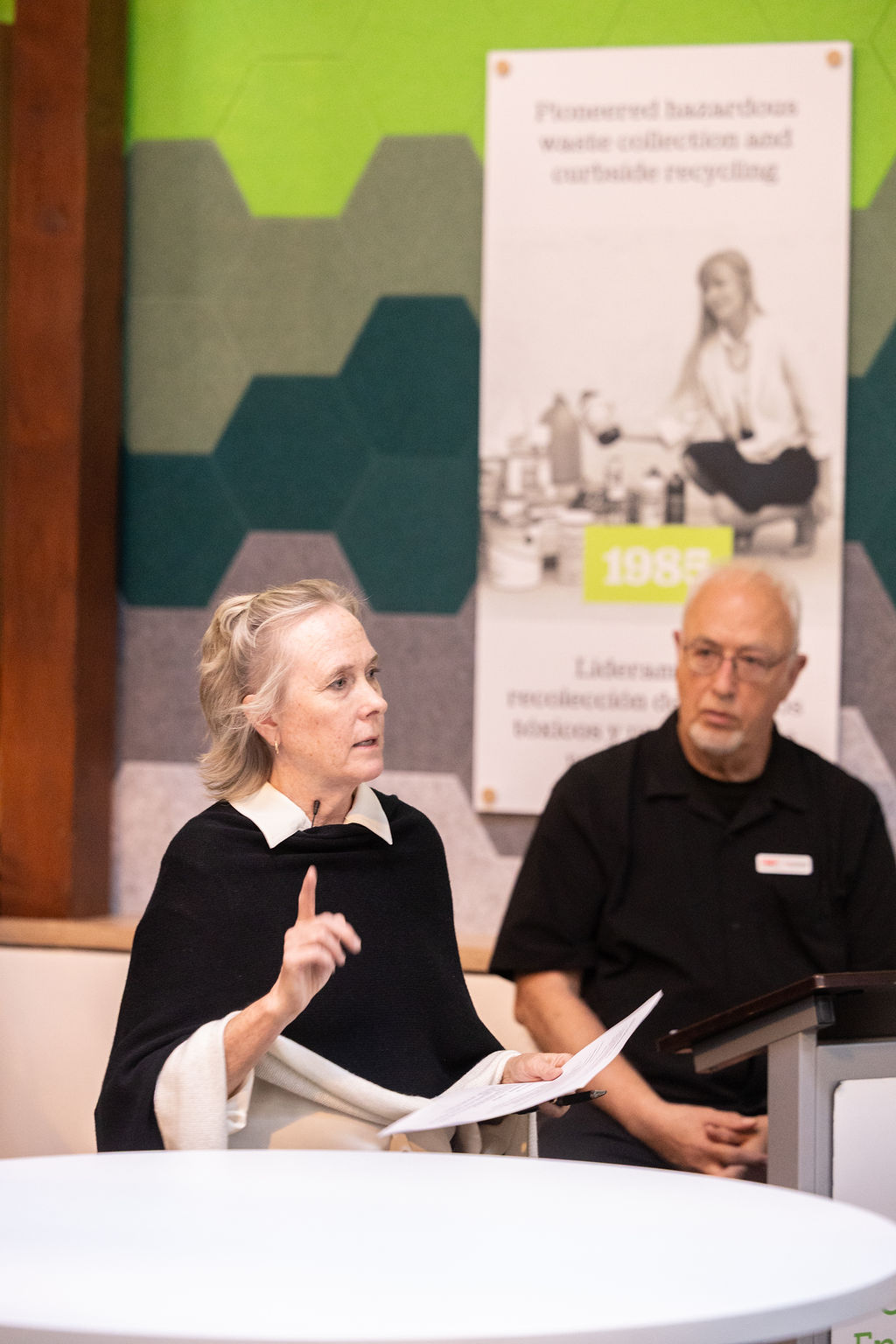
Sigrid Wright making a point during the opening, seated beside Mark Sylvester.
Sigrid Wright · Opening remarks
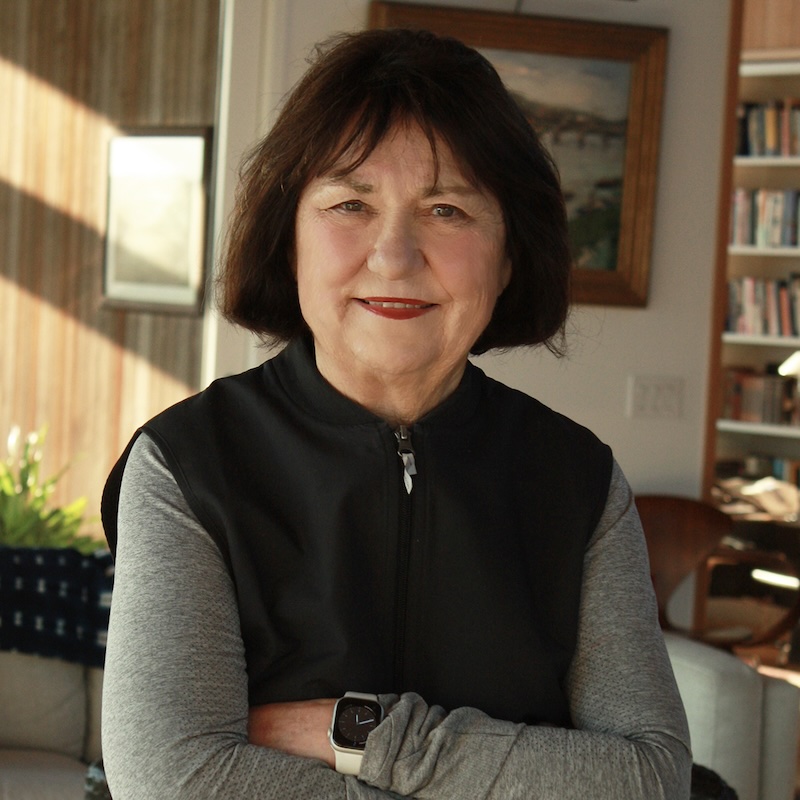
Sigrid Wright
Co-curator
Sigrid Wright
CEO, Community Environmental Council

Architect of CEC's Year of Active Hope. Three decades leading climate and sustainability work in the Santa Barbara region.

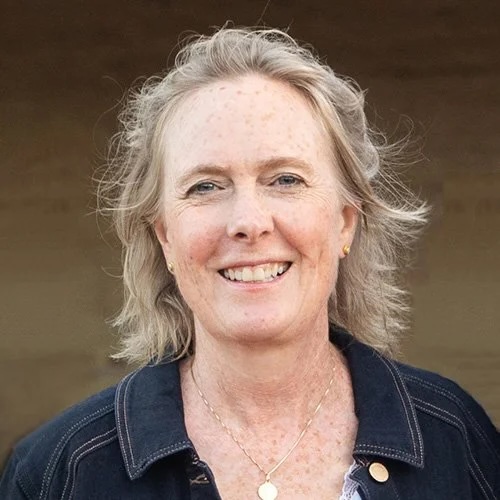
Victoria Riskin
Co-curator
Victoria Riskin
President and Founder, Bluedot Inc.

Award-winning screenwriter and former president of the Writers Guild of America West. Long-time advocate for human rights and climate action.

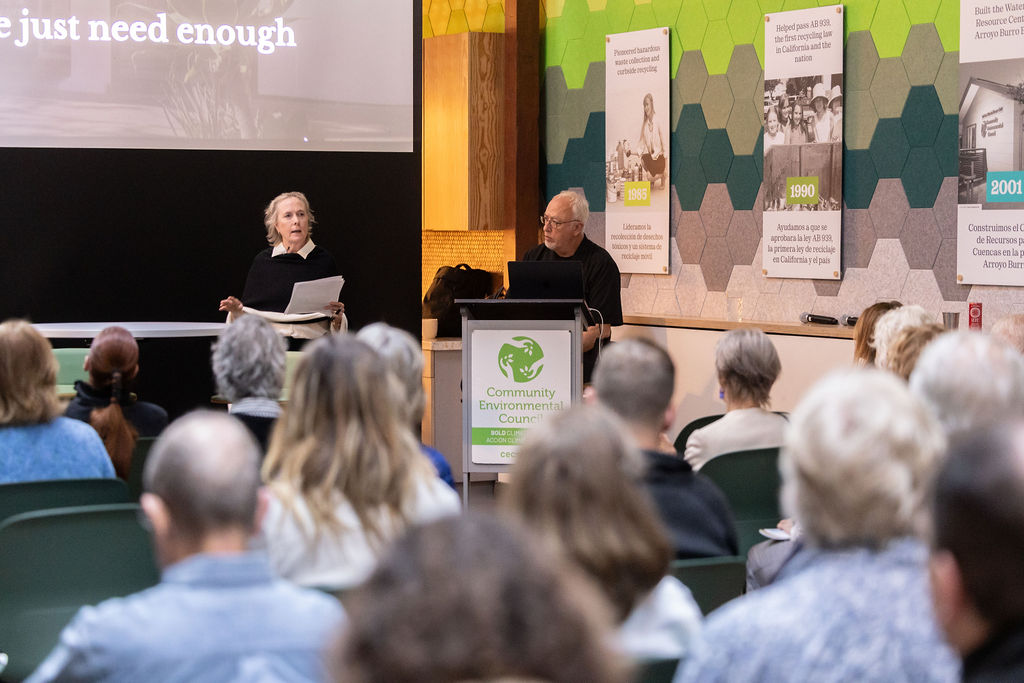
Sigrid Wright at the lectern, with the line 'we just need enough' on the screen.
The Opening

“We just need enough.” Sigrid setting up the four signals.

Four signals, all grounded in data

Sigrid's opening could have been its own TED talk. She walked the room through four reasons for hope, each one with a citation behind it.

Signal 01

The tech exists and it's affordable. Stanford's Mark Jacobson makes the case that the technologies we need are already commercially available.

Signal 02

California is showing what's possible. The fourth largest economy in the world, with a plan. Markets follow when this state sets direction.

Signal 03

People care more than we think. Yale's long-running survey shows about half of Americans now alarmed or concerned and ready to act.

Signal 04

We don't need everyone, we need enough. Everett Rogers' adoption curve. Once 15 to 20 percent are in and an accelerant kicks, the mainstream moves.

Three talks, one argument

Each speaker's argument filled a gap the others left open. Hayhoe on the conversation. Ritchie on the data. Johnson on the action. Together they made one piece.

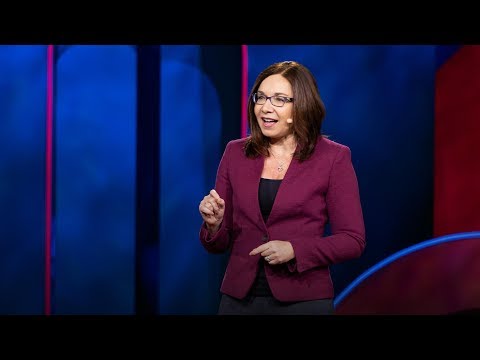
Dr. Katharine Hayhoe
01

Dr. Katharine Hayhoe

Atmospheric scientist · Texas Tech University

The single most important thing you can do about climate is talk about it. Not more science, we've had the science for 150 years. Start from the heart, not the head. Find a shared value — parent, neighbor, hunter, person of faith — and connect it to why a changing climate matters to a life someone already lives.

Fear makes us run from the bear. Rational hope keeps us going. The conversation is where it starts.

"The number one thing we can do is the exact thing we're not doing. Talk about it."
Watch the Talk →
Dr. Hannah Ritchie
02

Dr. Hannah Ritchie

Data scientist · Our World in Data, University of Edinburgh

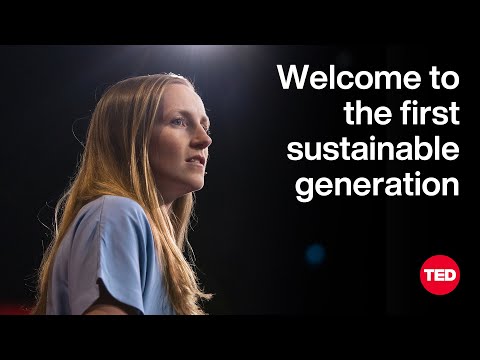
We've got the framing upside down. We could be the first generation to live sustainably, not the last. The world was never sustainable. Half of children once died young. We've cut child mortality, cut extreme poverty, and emissions per person have already peaked.

Solar costs have fallen more than 99 percent. Batteries are down 98 percent. Progress no longer has to cost the planet. Reframe sustainability as an opportunity, not a sacrifice.

"Far from being the last generation, we could be the first. The first to be sustainable."
Watch the Talk →
Dr. Ayana Elizabeth Johnson
03

Dr. Ayana Elizabeth Johnson

Marine biologist and policy expert · Author

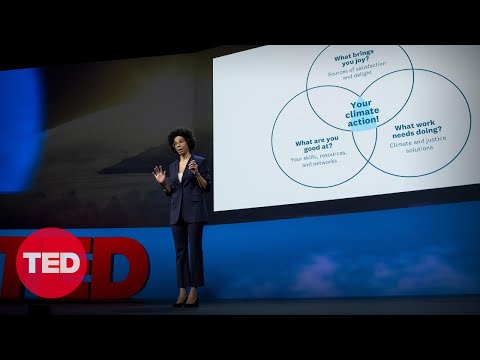
Stop asking for the one quick, easy thing. That ship has sailed. Instead, find your place in the work with a Venn diagram. What are you good at. What work needs doing. What brings you joy. Sit at the center as many minutes of your life as you can.

We already have most of the solutions. The word she loves is implementation. Movements should be leaderful, not led by a few.

"Help us, help you, help us all save the planet."
Watch the Talk →

Then we talked

This is the part you don't get at a big TED event. The talks ended, the room opened up, and the conversation was the best part of the night.

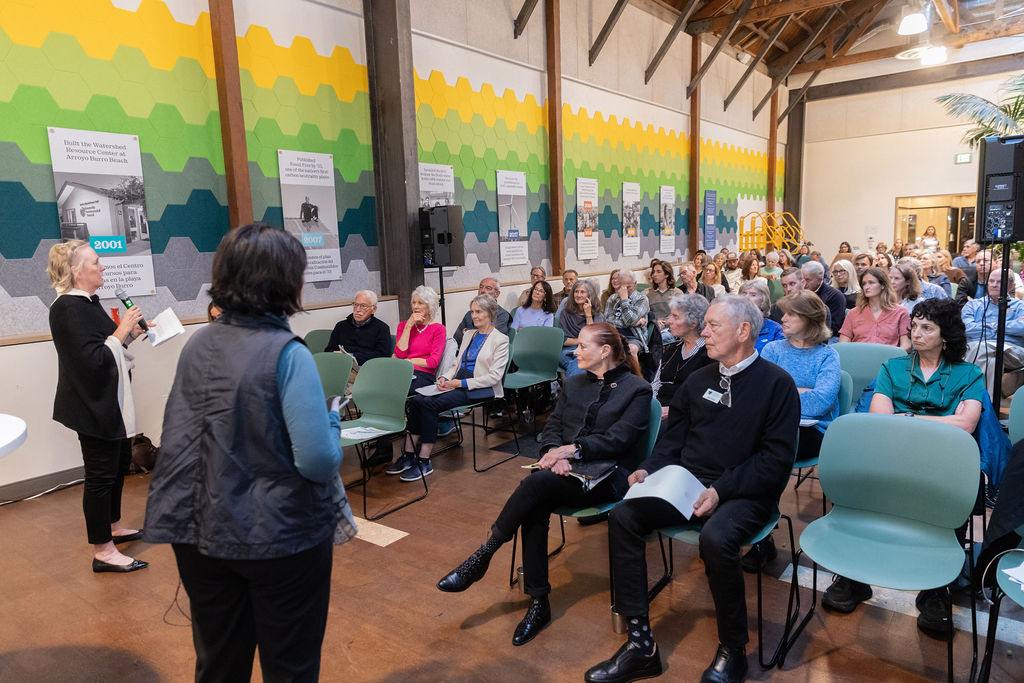
An audience member standing to ask a question during the conversation.
The room talked back
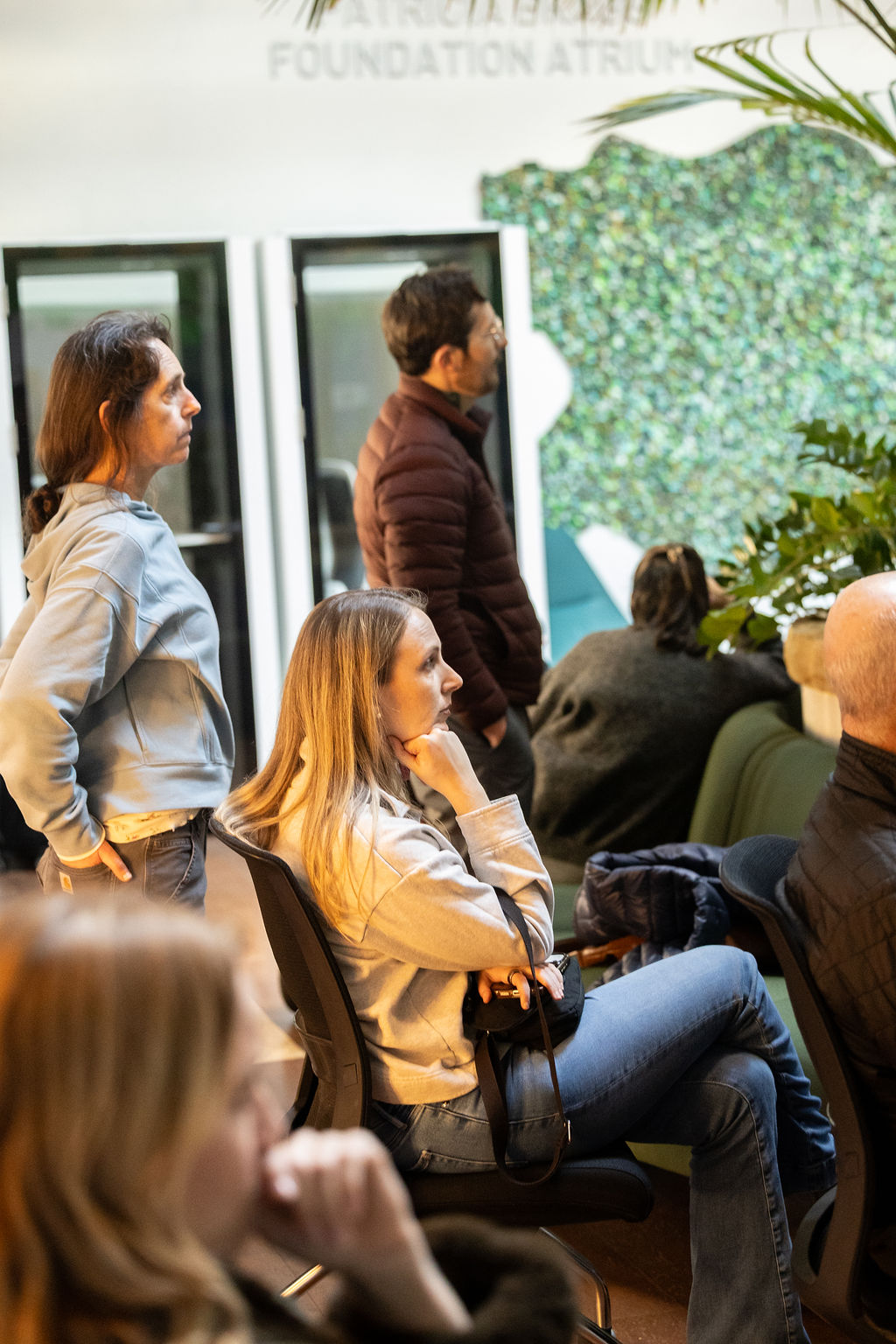
Attendees listening intently in the Patricia & Jim Selbert Foundation Atrium.
Listening hard
The choir question

Someone asked how we reach the people who don't want to hear it. The answer that landed: don't argue the loaded term, talk about the specific local thing — the salmon run, the dried-up river. And don't dismiss the choir. The choir is how change actually moves.

Hand a kid the microphone

Teachers in the room described what happens when a teenager speaks at a city council meeting. Two kids once flipped a unanimous vote on a composting machine. Give young people agency and you set their course for life.

Plug-in solar

One attendee can't put panels on a home she now rents, like a lot of people in condos and apartments. She pushed the room to call legislators about plug-in solar, which is in front of the state right now.

The hunger for good news

It kept surfacing. People are starved for somewhere to bring the things that are going right. That's most of why this night existed.

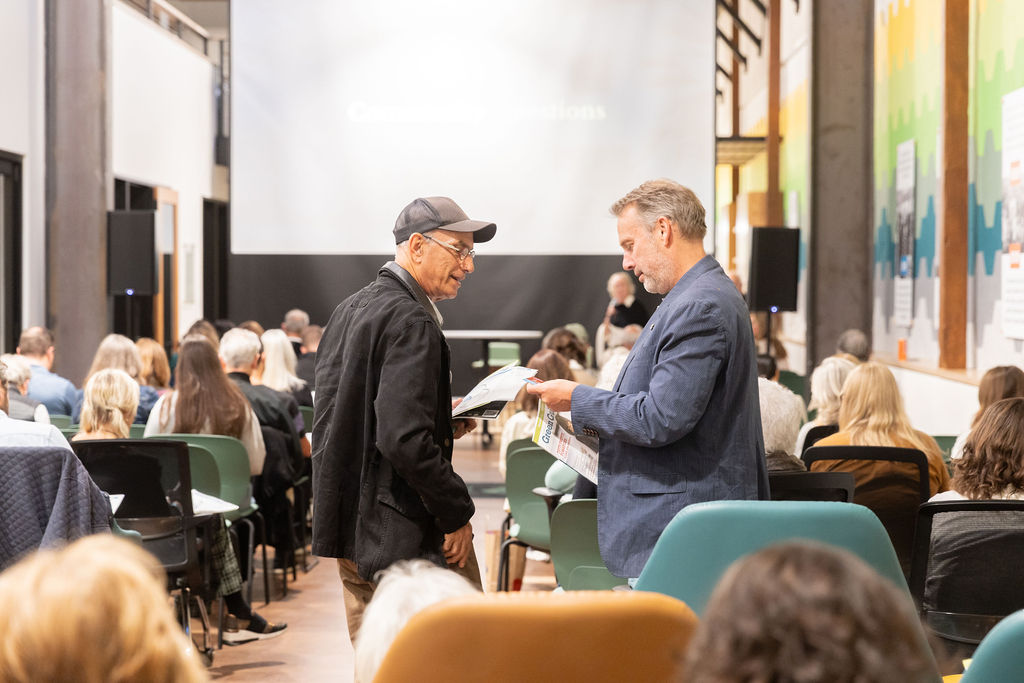
Mark Sylvester talking with an attendee after the screenings.
After the Talks

The conversation kept going long after the lights came up.

Active Hope is a practice

Active Hope is Joanna Macy's idea. It doesn't ask you to feel optimistic before you act. It asks for attention. You name what you want, then you take a step. Hope as a muscle, not a mood.

Despair is a luxury. It asks nothing of you.
— A line carried in from women leading in conflict zones

That's the whole point of this series. We don't just watch the talks. We do something with them.

Ideas change everything.

Mark Sylvester · TEDxSantaBarbara organizer since 2010

Event photography by Sarita Relis